Integrated production is not proved by what you do in the field, but by what you can show you did. When the certification body comes to audit, what gets checked is records: what was applied, where, when, who decided it, where the product came from and who the harvest was sold to. This article summarises which records the national regulation requires, what the technical standards for each crop add and how to organise them so they do not become a burden.
The framework: Real Decreto 1201/2002
Integrated production of agricultural products is regulated at national level by Real Decreto 1201/2002 of 20 November (the Spanish Royal Decree regulating integrated production of agricultural products). There are two more layers on top of that:
- Crop-specific technical standards, which set out the compulsory, prohibited and recommended practices (for example, Orden APA/370/2004 for vegetables or Orden APA/1657/2004 for citrus fruit).
- Regional legislation, as in many cases the autonomous communities have their own regulations and their own integrated production brand, with technical standards for their crops.
Before organising your records, find out which technical standard applies to your crop in your autonomous community and in which version. That is where the details are: required analyses, permitted active substances, fertilisation limits or pruning and irrigation practices.
Operator obligations that generate records
Article 5 of Real Decreto 1201/2002 lists the operators' obligations. Several of them translate directly into paperwork or data you need to have:
| Obligation (art. 5) | What record it involves |
|---|---|
| Having competent technical services direct and monitor compliance | Identification of the technician and documented recommendations or visits. |
| Training staff | Proof of the training received by those working in integrated production. |
| Complying with the standards and keeping a farm logbook | The logbook with all crop operations and practices. |
| Obtaining the entire production of the variety under integrated production, in clearly separated units | Identification of the plots included and their variety. |
| Storing, handling and selling separately | Records that make it possible to track batches. |
| Reporting the production programme by plot every year | The annual programme sent to the certification body. |
| Applying corrective measures | Proof of incidents and how they were corrected. |
In addition, article 4 requires you to notify the competent authority of the activity and submit a descriptive report on the holding, and article 6 provides for at least one inspection a year, including a physical inspection, which may be unannounced.
The farm logbook in integrated production
The regulation requires you to record "all crop operations and practices". In practice, a complete logbook includes:
- Plant protection treatments: date, plot, pest, product with its registration number, quantity, equipment, applicator and technical justification.
- Fertilisation: date, plot, type of fertiliser, quantity and method of application.
- Irrigation: water supplied by sector and period.
- Crop operations: pruning, thinning, tillage, cover crop management, depending on what the technical standard requires.
- Analyses: of soil, water, leaves or residues, when the technical standard calls for them.
- Harvesting: dates and quantities by plot.
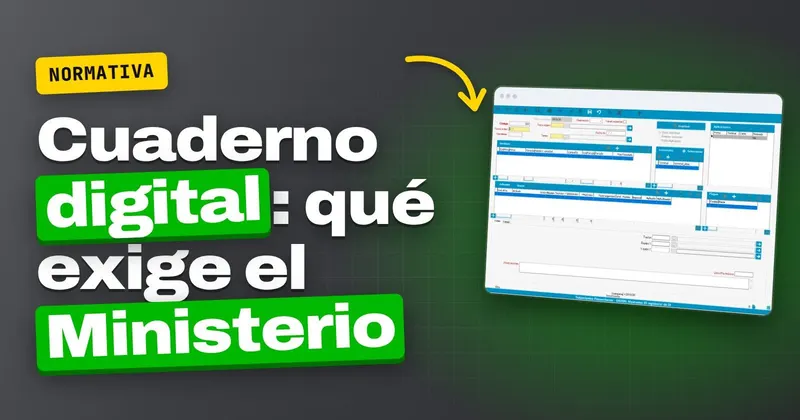
A useful detail: article 16 of Real Decreto 1311/2012 (the Spanish Royal Decree on sustainable use of plant protection products) accepts integrated production logbooks as a treatment record, provided they include the data required by its annex III. In other words, you do not need to keep two logbooks, but the integrated production one must contain everything the general treatment register requires. And that register must be in electronic format from 1 January 2027.
Traceability of inputs and outputs
Annex III of Real Decreto 1201/2002 requires the operator to keep records that allow the inspection body to know:
- The origin, nature and quantities of the raw materials entering the holding, and their use.
- The nature, quantities and recipients of the products sold.
- The date of the last application of any product not compatible with the standards, where applicable.
This means the field logbook is not enough. You need purchase invoices or delivery notes for products, a record of what goes in and out of the store, and the delivery notes for sales of the fruit. If the product inventory does not match what is recorded in the logbook, the auditor will ask about it.
Common mistakes in audits
- Treatments without technical justification. In integrated production it is not enough to record what was applied: you must be able to explain why, usually with pest monitoring or the technician's recommendation.
- Active substances not permitted in the technical standard. A product authorised for the crop may not be permitted in integrated production, or may have a limited number of applications.
- Mixed plots. One variety under integrated production and another conventional in the same plot, with no clear separation.
- Stock that does not add up. Purchases that do not appear as used or usage with no purchase to back it up.
- Logbook filled in at the end. It shows in the handwriting, in the round dates and in the gaps.
How GAP helps
GAP was created to bring the integrated control of intensive farming together on a single platform, and its functions include monitoring sector standards such as EurepGAP and integrated production. It stores technical data (irrigation, fertilisation, treatments) and financial data at the level of farm, variety and decision unit (plot), with detail on products and active substances.
Traceability and stock cover the journey from the supplier order and product receipt through to transfers between stores or farms and consumption on each plot. Irrigation, fertilisation and treatment orders are issued by plot, and the harvesting module completes the cycle with yield estimates, customers and sales delivery notes. Treatments are also sent to the digital logbook (CUE) of your autonomous community.